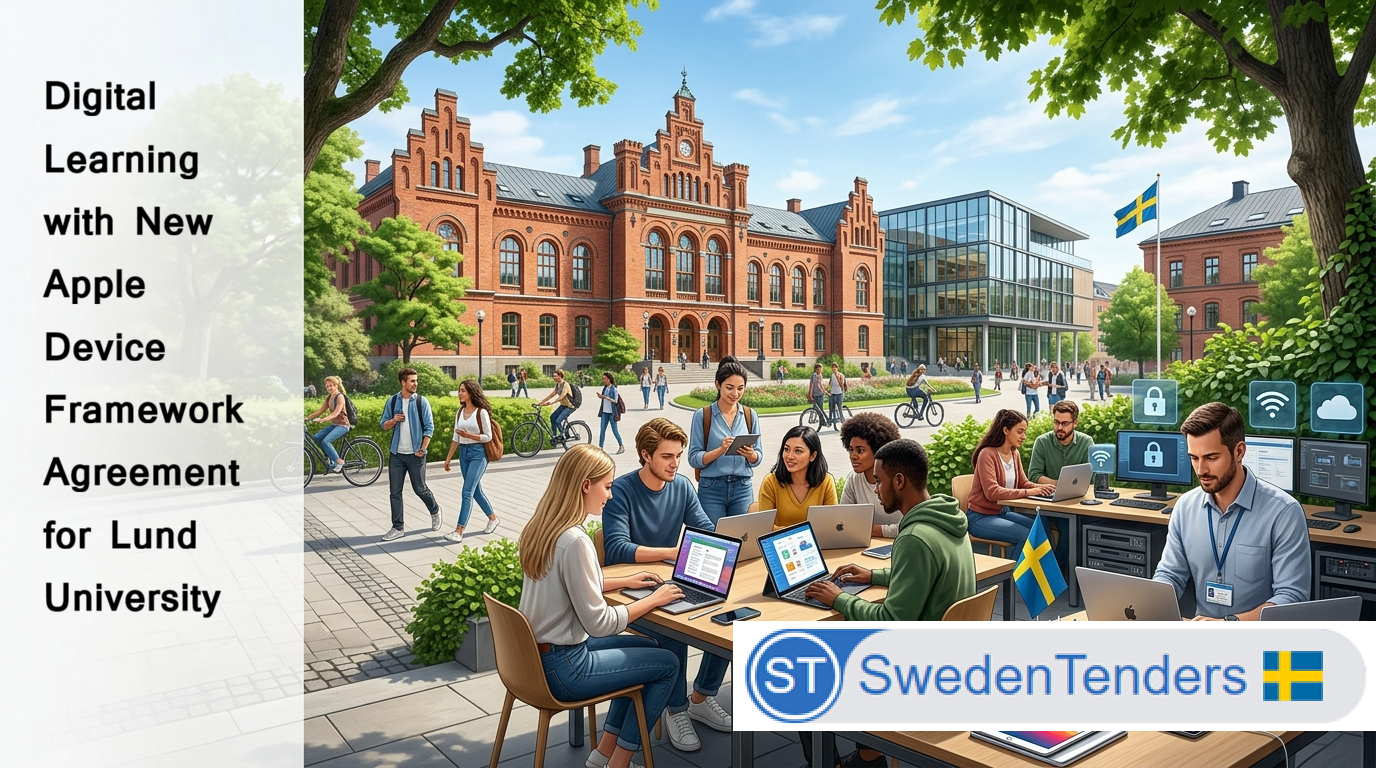
Sweden Strengthens Digital Learning with New Apple Device Framework Agreement for Lund University
16 Jul 2026
Laptops, tablets and smartphones have become as essential to modern universities as classrooms and laboratories. As higher education institutions expand digital teaching, research and hybrid learning, ensuring reliable access to secure computing devices has become a strategic procurement priority. Reflecting this shift, Lund University has awarded a new framework agreement for the supply of iOS, macOS and iPadOS devices and related accessories. The agreement, valued at approximately SEK 120 million, positions the university to modernise its digital ecosystem while providing students, researchers and staff with access to Apple based technology over the coming years. Introduction Universities are increasingly investing in digital infrastructure to support research, teaching, administration and collaboration. From lecture halls equipped for hybrid learning to laboratories relying on high performance computing devices, technology procurement now plays a central role in higher education. Against this backdrop, Lund University has completed a competitive procurement for Apple based computing devices, including macOS computers, iPads, iPhones and associated accessories. Rather than purchasing equipment through individual orders, the university has established a framework agreement that enables efficient procurement throughout the contract period. The contract was awarded to Dustin Sverige AB following an open procurement procedure conducted under the European Union's public procurement rules. The framework agreement has an estimated value of approximately SEK 120 million, while the overall procurement was initially estimated at SEK 250 million excluding VAT. Why This Contract Matters Digital devices have become fundamental infrastructure within universities. Researchers require powerful computers to analyse data, academic staff depend on mobile technology for teaching, while students increasingly access learning platforms through laptops and tablets. By establishing a dedicated framework agreement, Lund University gains the flexibility to procure Apple devices whenever required without conducting separate procurement exercises for every purchase. This reduces administrative complexity while ensuring consistency across departments. The procurement also reflects a broader trend across European public institutions. Rather than viewing technology purchases as isolated acquisitions, universities are adopting long term procurement strategies that support digital transformation, cybersecurity and operational efficiency. For technology suppliers, contracts of this nature represent more than hardware sales. They frequently generate opportunities involving deployment services, lifecycle management, technical support, device configuration, asset management and future upgrades. Contract Timeline Procurement Launch: Lund University initiated an open public procurement for Apple based client devices and related accessories. Competition Phase: Four suppliers submitted tenders during the competitive procurement process, demonstrating healthy market participation. Winner Selection: Dustin Sverige AB was selected as the preferred supplier on 12 June 2026 following evaluation of the submitted offers. Contract Award: The framework agreement was formally concluded on 30 June 2026. Framework Duration: The agreement commenced on 1 July 2026 and is scheduled to run until 30 June 2028. Contract Overview The procurement covers the supply of Apple ecosystem devices, including computers running macOS, iPads operating on iPadOS, iPhones using iOS and compatible accessories. These products will support teaching, research, administration and day to day university operations. Rather than purchasing a fixed quantity of equipment, Lund University has established a framework agreement. This procurement model allows the institution to place orders throughout the contract period whenever operational requirements arise. The framework structure also enables better budget planning, procurement efficiency and standardisation across the university while ensuring access to current technology during the agreement's lifetime. Key Contract Details Project Supply of iOS, macOS and iPadOS Devices and Accessories Country Sweden Contracting Authority Lund University Winning Supplier Dustin Sverige AB Contract Type Framework Agreement Framework Value Approximately SEK 120 Million Estimated Procurement Value SEK 250 Million (excluding VAT) Contract Period 1 July 2026 – 30 June 2028 Procurement Procedure Open Procedure Main CPV 30200000 – Computer Equipment and Supplies Additional CPV Portable Computers, Desktop Computers, Mobile Telephones Award Criterion Price EU Directive Directive 2014/24/EU EU Funding No Government Procurement Agreement (GPA) Yes Project Scope The framework agreement covers Apple based computing devices and accessories required by Lund University. This includes desktop and portable computers running macOS, iPads, iPhones and associated peripherals that support academic and administrative activities. The agreement provides the university with a structured purchasing mechanism for technology refreshes, expansion projects and replacement requirements throughout the contract period. Because the procurement is structured as a framework agreement, actual purchases will depend on operational demand rather than a predefined order quantity. About the Contracting Authority Lund University Lund University is one of Sweden's oldest and most internationally recognised higher education institutions. The university serves tens of thousands of students while conducting research across science, engineering, medicine, social sciences, humanities and business disciplines. As a public university, Lund University regularly procures technology, research equipment and digital services to support education, innovation and academic collaboration. Investments in modern computing infrastructure are increasingly important as universities expand digital learning environments and research capabilities. About the Organisations Involved Lund University – Contracting Authority Lund University managed the procurement, prepared the tender documentation, evaluated supplier submissions and awarded the framework agreement. The institution will use the agreement to procure Apple devices during the contract period. Dustin Sverige AB – Successful Bidder Dustin Sverige AB was selected as the successful supplier following the open procurement process. The company is one of the Nordic region's leading IT products and services providers, supplying hardware, software and digital workplace solutions to public and private sector organisations. Advania Sverige AB – Participating Tenderer Advania Sverige AB submitted a competitive offer but was not selected. The company is a major Nordic IT solutions provider with expertise in managed services, cloud solutions and digital transformation. Atea Sverige AB – Participating Tenderer Atea Sverige AB also participated in the competition. The company is one of Europe's largest suppliers of IT infrastructure, workplace technology and digital services for public sector organisations. Foxway Education AB – Participating Tenderer Foxway Education AB submitted a bid during the procurement. The company specialises in educational technology solutions, lifecycle management and digital devices for schools and universities across the Nordic region. Förvaltningsrätten i Malmö – Review Authority The Administrative Court in Malmö serves as the review authority for the procurement process. It provides legal oversight and handles procurement related appeals in accordance with Swedish public procurement legislation. Procurement Analysis Lund University conducted the procurement using an open procedure, one of the most transparent and competitive procurement methods available under Directive 2014/24/EU. This allowed any qualified supplier capable of meeting the technical and commercial requirements to submit a tender. The procurement attracted four competing bids, demonstrating strong market interest and healthy competition within Sweden's public sector IT procurement market. Unlike highly specialised infrastructure projects that often receive limited participation, the market for enterprise computing devices remains well established, with several experienced suppliers capable of supporting large institutional customers. The contract was awarded through a framework agreement without reopening competition. This means the university selected a single supplier that will provide Apple devices and accessories throughout the agreement period under pre agreed commercial terms. Price served as the award criterion, reflecting the maturity of the product category. Since Apple devices follow standardised technical specifications, contracting authorities often focus on achieving the best commercial value while ensuring reliable delivery and service capability. The framework agreement provides procurement flexibility while reducing administrative effort. Instead of launching individual tenders whenever departments require new devices, Lund University can place orders directly through the established agreement, significantly shortening purchasing timelines. Additional Procurement Facts Procurement Procedure Open Procedure Competition Level Four tenders received Award Method Single Supplier Framework Agreement Framework Type Without reopening competition Award Criterion Price Framework Value Approximately SEK 120 Million Estimated Procurement Value SEK 250 Million excluding VAT Contract Duration 1 July 2026 – 30 June 2028 Dynamic Purchasing System Not Used Government Procurement Agreement Yes EU Funding No EU Funding Strategic Procurement No strategic procurement objective declared Market & Industry Perspective Higher education institutions across Europe are investing heavily in digital infrastructure as hybrid learning, cloud based collaboration and research computing become standard operating models. Reliable computing devices are no longer optional administrative tools; they are critical assets supporting teaching, research, cybersecurity and student services. Apple devices continue to gain popularity within universities because of their performance, security features and compatibility with research, design and creative applications. Institutions that standardise device procurement also benefit from simplified IT management, stronger security controls and lower lifecycle administration costs. For technology distributors, framework agreements with universities provide long term business opportunities extending beyond hardware supply. Device deployment, asset management, configuration services, warranty support and lifecycle replacement programmes frequently generate recurring revenue throughout the agreement period. The procurement also highlights the importance of reseller networks within Europe's public technology market. Rather than purchasing directly from manufacturers, public institutions often procure through specialised IT distributors capable of providing logistics, technical support and procurement compliance. Economic Significance Although this agreement focuses on digital equipment rather than physical infrastructure, its economic significance extends beyond hardware procurement. Reliable digital devices improve teaching quality, support international research collaboration and strengthen the university's operational efficiency. The framework agreement also contributes to Sweden's wider digital economy by supporting established IT distribution businesses and associated service providers. Ongoing purchases under the agreement will create opportunities across logistics, technical support, software deployment and managed device services. For suppliers operating in the Nordic education technology market, contracts of this scale demonstrate continued public investment in digital transformation despite broader economic uncertainty. Future Procurement Opportunities The framework agreement primarily covers Apple devices and accessories, but universities typically require a much broader ecosystem of digital products and services throughout the technology lifecycle. Future procurement opportunities may include mobile device management platforms, endpoint security solutions, classroom technology, audiovisual systems, cloud services, software licensing, cybersecurity tools, technical support, asset disposal, sustainability services and device refurbishment. As higher education institutions continue expanding digital campuses, procurement activity is expected to extend beyond hardware towards integrated workplace technology, artificial intelligence tools, collaboration platforms and secure digital learning environments. Opportunities for Suppliers While Dustin Sverige AB secured the framework agreement, additional opportunities often arise during implementation and throughout the contract period. Device configuration and deployment services. Mobile device management (MDM) platforms. Apple device lifecycle management. Repair and warranty support. IT asset tracking and inventory management. Cybersecurity and endpoint protection solutions. Cloud integration and identity management. Educational software and licensing services. Device recycling and sustainable disposal programmes. User training and technical support services. Suppliers capable of complementing framework agreements with value added services are often well positioned to participate in future technology procurements across Sweden's higher education sector. What Businesses Should Watch Technology procurement within universities is evolving from product purchasing towards long term digital ecosystem management. Buyers increasingly expect suppliers to deliver not only devices but also deployment expertise, lifecycle support, sustainability programmes and cybersecurity capabilities. Companies targeting Sweden's education sector should closely monitor upcoming framework renewals, digital campus initiatives and research infrastructure investments. Institutions are likely to continue modernising their technology environments as digital learning and artificial intelligence become more deeply integrated into higher education. The competitive participation of four established Nordic technology suppliers also indicates that future public sector IT procurements will remain highly contested, making pricing, service quality and operational capability key differentiators. SwedenTenders.com Procurement Intelligence The framework agreement awarded by Lund University reflects a broader procurement trend across Europe's higher education sector. Universities are no longer purchasing technology simply to replace ageing computers; they are building long term digital environments that support education, research and administration through standardised, secure and scalable technology platforms. The decision to establish a two year framework agreement demonstrates how public institutions are shifting from transactional purchasing to strategic procurement. Instead of repeatedly conducting individual tenders for every technology requirement, buyers are creating procurement frameworks that reduce administrative effort while ensuring continued access to approved products and competitive pricing. Another significant feature of this procurement is the strong level of market competition. Four established IT suppliers submitted bids, highlighting the maturity of Sweden's public sector technology market. Healthy competition not only improves pricing outcomes but also encourages suppliers to strengthen their service capabilities, logistics networks and customer support. For technology providers, future success will depend on offering more than hardware. Universities increasingly expect suppliers to deliver integrated services including device configuration, cloud integration, cybersecurity, asset lifecycle management, sustainability programmes and technical support. As artificial intelligence, digital learning platforms and hybrid education continue expanding, demand for high performance computing devices and secure digital infrastructure is expected to remain strong across European universities. Suppliers that combine product expertise with long term digital transformation services are likely to secure a competitive advantage in future public procurements. Supplier Takeaways Framework agreements continue to dominate large scale public technology procurement. Competitive pricing remains essential, but value added services increasingly influence long term customer relationships. Universities are investing in complete digital ecosystems rather than standalone hardware purchases. Apple focused procurement creates opportunities for deployment, lifecycle management and technical support providers. Sustainability, refurbishment and responsible device disposal services are becoming increasingly important in public sector procurement. Future university tenders are expected to include cloud services, AI enabled learning technologies and cybersecurity solutions alongside hardware procurement. Key Takeaways Lund University has awarded a framework agreement for the supply of Apple based devices and accessories. Dustin Sverige AB secured the contract following an open procurement procedure involving four competing suppliers. The framework agreement has an estimated value of approximately SEK 120 million. The overall procurement was initially estimated at SEK 250 million excluding VAT. The agreement will run from 1 July 2026 until 30 June 2028. The procurement was conducted under Directive 2014/24/EU using an open procedure. Price served as the sole award criterion. The agreement supports Lund University's long term digital transformation strategy while creating future opportunities for technology and service providers. Conclusion Lund University's latest technology procurement demonstrates how digital infrastructure has become an essential component of modern higher education. By establishing a framework agreement for Apple devices and related accessories, the university has created a flexible procurement mechanism capable of supporting teaching, research and administration over the coming years. Beyond the immediate contract, the procurement reflects a wider European trend towards long term technology partnerships, efficient framework agreements and standardised digital environments. As universities continue expanding hybrid learning, advanced research and secure digital services, procurement strategies are increasingly focused on lifecycle value rather than one time equipment purchases. For suppliers, the contract highlights the growing importance of combining competitive pricing with strong logistics, technical expertise and lifecycle support. Institutions across Europe are expected to continue investing in digital transformation, creating sustained opportunities for companies capable of delivering integrated technology solutions. Source: Official TED (Tenders Electronic Daily) Contract Award Notice 491196-2026, published in the Supplement to the Official Journal of the European Union (OJ S 135/2026), 16 July 2026.
View Details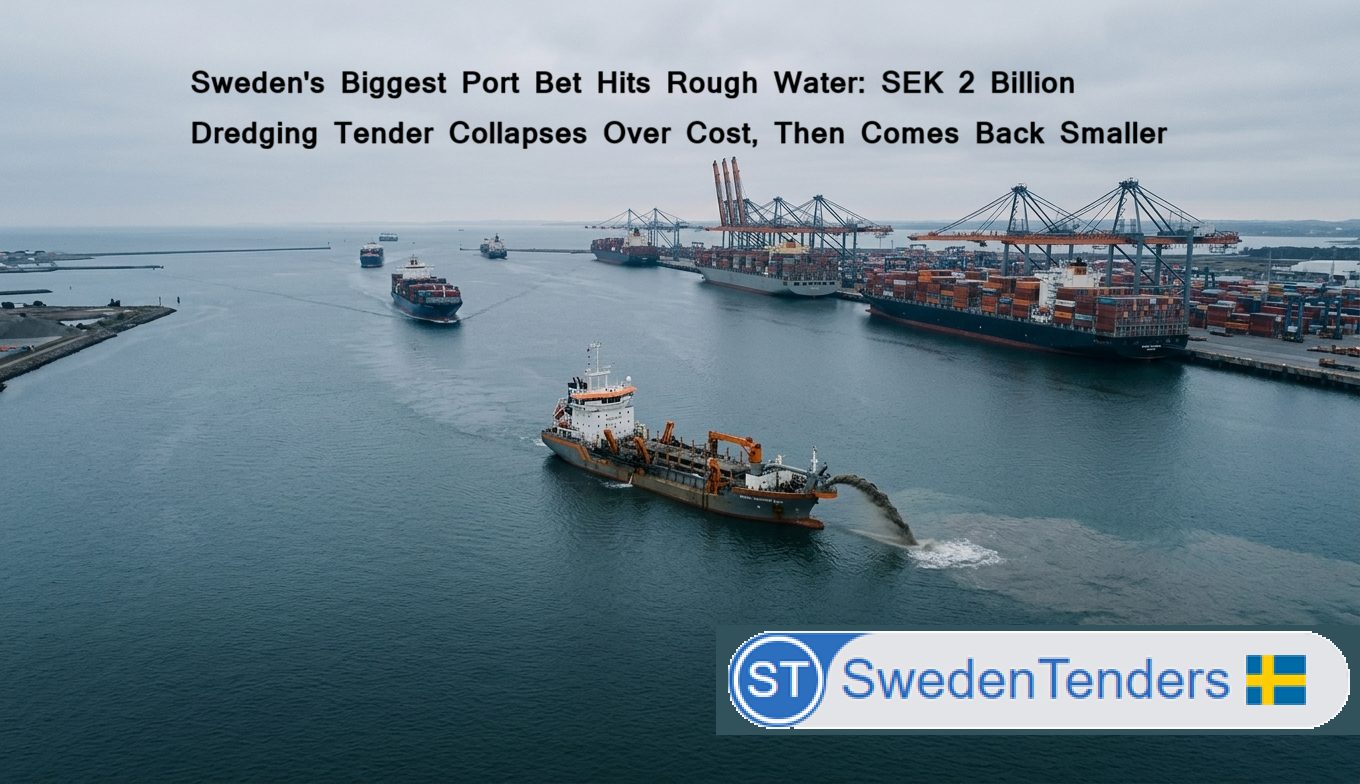
Sweden's Biggest Port Bet Hits Rough Water: SEK 2 Billion Dredging Tender Collapses Over Cost, Then Comes Back Smaller
15 Jul 2026
Standfirst: The Swedish Maritime Administration set out to dredge a deeper channel into the Port of Gothenburg, Scandinavia's only gateway for the world's largest container ships, through a tender valued at up to SEK 2 billion (roughly €180 million). No contractor was selected. The buyer walked away, citing insufficient funds. What happened next tells a sharper story about cost inflation in European marine works than the notice itself ever could.IntroductionGothenburg's port sits at an odd disadvantage for a facility that calls itself Scandinavia's only true gateway to the world's largest cargo ships. The fairway leading into it is too shallow. Container vessels over 400 metres long, capable of carrying more than 20,000 boxes, have had to arrive half empty because the channel simply cannot take their full draft. Fixing that has been a national infrastructure priority since 2019, backed jointly by the Swedish Maritime Administration, the Swedish Transport Administration and the Port of Gothenburg.In late 2025, the Maritime Administration and the port authority jointly floated a tender to dredge and blast roughly eight million cubic metres of material from the approach channel, known as Torshamnsleden, at an estimated cost of up to SEK 2 billion. Three contractors submitted bids. None was selected. The reason given in the official award notice is blunt: the buyer decided the project could not proceed because of insufficient funds.Why This Contract MattersThis is not a story about a contract changing hands, it is a story about one not changing hands and why that matters more. Public buyers cancelling major infrastructure tenders on cost grounds has become a recurring theme across Europe's marine and civil works sector, as inflation in fuel, steel, vessel charter rates and specialist dredging capacity has pushed bid prices well above the budgets set years earlier when projects were first costed.For Gothenburg, the stakes are strategic rather than merely operational. Roughly 30% of Sweden's foreign trade moves through this port and it is the only Swedish facility capable of receiving the largest transoceanic vessels at all, even if, until now, not fully loaded. A stalled dredging programme does not just delay an engineering project; it keeps Swedish exporters and importers paying a competitiveness penalty every time a giant containership has to sail past Gothenburg only partially laden.Contract Timeline Date Milestone 2019 Skandiaporten project formally launched by Sjöfartsverket, Trafikverket and the Port of Gothenburg February 2024 Port of Gothenburg begins quay reinforcement works under the parallel harbour basin contract Late 2025 Joint dredging tender for the fairway (this notice) receives three bids October 2025 Procurement cancelled; bids came in above the available budget Early 2026 Fairway design revised, dredged area narrowed, target depth reduced to 16.5 metres from 17.5 metres 13 15 July 2026 Award notice confirming the cancelled procurement published in OJ S 134/2026 Autumn 2026 Quay side dredging and rock excavation expected to begin, per the revised programme 2027 2028 Fairway dredging by the Swedish Maritime Administration expected to proceed under a scoped contract Contract OverviewSjöfartsverket, Sweden's central government maritime authority, ran an open procedure under Directive 2014/24/EU for works to deepen and widen the Torshamnsleden fairway leading into the Port of Gothenburg. The project, known as Skandiaporten or Skandia Gateway, combined dredging and controlled blasting to remove roughly eight million cubic metres of seabed material.The tender was a joint procurement between Sjöfartsverket and Göteborgs Hamn AB (Port of Gothenburg Authority), reflecting the split responsibilities in the wider programme: the Maritime Administration manages the fairway itself, while the port company is separately responsible for quay strengthening within the harbour basin. This particular notice covers only the fairway dredging component. Three tenders were received. None was awarded. The buyer closed the competition, citing insufficient funds to proceed at the prices bid.Key Contract Details Field Detail Contracting authority Sjöfartsverket (Swedish Maritime Administration) Co procuring entity Göteborgs Hamn AB (Port of Gothenburg Authority) Title Muddring av farled till Göteborgs hamn, projekt Skandiaporten CPV codes 45247100 Construction work for waterways; 45252124 Dredging and pumping works Procedure type Open procedure Legal basis Directive 2014/24/EU Estimated value SEK 2,000,000,000 (approximately €180 million at mid 2026 exchange rates) Award criterion Price only, lowest total fixed price Planned duration 1 November 2025 to 30 November 2027, with an option to extend by 12 months Outcome No winner selected, competition closed due to insufficient funds Tenders received 3 Complaints/review requests 0 EU funding None disclosed GPA coverage No Review body Förvaltningsrätten i Linköping (Administrative Court of Linköping) Place of performance Göteborg, Västra Götalands län (NUTS SE232), Sweden Project ScopeThe works as originally tendered called for deepening and widening roughly five kilometres of fairway, increasing maximum vessel draft from the current 13.5 metres toward a target in the 16.5 17.5 metre range, depending on the final design. Dredged and blasted material, including a portion of contaminated sediment requiring careful containment, was to be relocated to a designated disposal site west of Vinga, an area long used for this purpose because of its depth and stable, accumulating seabed.The notice also attached extensive environmental conditions to the works, aimed at reducing pollution during construction: strict requirements on marine fuel sulphur content, minimum shares of renewable energy in vehicle and vessel fuel use, age limits on land based construction machinery and mandatory emissions class standards for heavy vehicles. These conditions were carried into the tender regardless of which contractor eventually wins the rescoped works and they illustrate how far environmental compliance requirements have moved into the technical fabric of Swedish public works contracts, not just their scoring criteria.About the Contracting AuthoritySjöfartsverket, the Swedish Maritime Administration, is the central government authority responsible for maintaining Sweden's shipping lanes, icebreaking services, pilotage and maritime safety infrastructure. It manages the fairways leading into Swedish ports, including the deepening and widening work at the centre of this notice and adjusts navigational markings and sea safety installations as fairway dimensions change. Its role in Skandiaporten is technical and operational: while the wider project also involves Trafikverket (the Swedish Transport Administration, responsible for needs analysis and state co financing) and the Port of Gothenburg (responsible for quay works), Sjöfartsverket is the entity actually procuring and executing the fairway dredging.Göteborgs Hamn AB, the Port of Gothenburg Authority, is named in the notice as a joint procuring party. It is Scandinavia's largest port and Sweden's only facility offering direct ocean shipping to Asia and other continents for the largest container vessels. The port company's own quay strengthening works, running in parallel to this fairway contract, began in February 2024 and are being funded and executed separately from the dredging scope covered here.Förvaltningsrätten i Linköping, the Administrative Court of Linköping, is designated as the review body for any procurement challenges connected to this notice. Its function is purely judicial, it did not participate in the decision to cancel the tender, but its listing gives unsuccessful or aggrieved bidders a defined legal route to contest procurement decisions under Swedish law.About the Organisations InvolvedNo contractor was awarded this contract, so there is no winning bidder to profile. The notice does not identify the three companies that submitted tenders and Swedentenders.com is not aware of any public disclosure naming them. What is established, from Sjöfartsverket's own project reporting, is that the bids received in late 2025 exceeded the funds the buyer had available, prompting cancellation rather than negotiation or an award at a higher price.Procurement AnalysisSjöfartsverket ran an open procedure, the standard EU wide competitive route for above threshold works contracts, evaluated purely on price, the lowest total fixed bid would have won, with no separate quality or technical scoring weighting recorded in the notice. That single criterion structure is common in large scale dredging and marine works, where technical specifications are usually fixed in the tender documents and price competition is expected to do the sorting.The critical fact in this notice is the non award justification: "insufficient funds," a decision made by the buyer rather than a failure of the market to produce compliant bids. That distinction matters. It means Sjöfartsverket judged all three tenders technically acceptable but collectively too expensive relative to its budget envelope, a scenario increasingly common in capital intensive marine works, where estimates fixed years earlier at the planning stage have not kept pace with the sharp rise in dredging vessel day rates, marine fuel costs and specialist blasting capacity across Northern Europe.No complaints were filed against the cancellation and the notice records the review body without any indication of a formal dispute, suggesting the market broadly understood or at least did not contest, the buyer's decision to walk away rather than proceed at inflated cost.Additional Procurement FactsThree tenders were received, all for a single, undivided lot; the notice does not break down submissions by SME status. The contract carried no framework agreement and no dynamic purchasing system, this was a conventional one off works contract. It was not covered by the WTO Government Procurement Agreement and no EU funding was attached to the project, meaning the entire cost burden falls on Swedish national infrastructure budgets and the Port of Gothenburg's own resources.Market & Industry PerspectiveMarine dredging and blasting for a project of this scale sits at the top end of a specialised, capital intensive segment of the European civil works market, dominated globally by a small number of large dredging contractors capable of mobilising heavy vessels, cutter suction dredgers and offshore disposal logistics at the multi million cubic metre scale this project demands. The cancellation of this tender is a visible signal to that market: buyers are hitting a ceiling on what they can afford, even for strategically important national infrastructure.Industry reporting following the cancellation indicates Sjöfartsverket and the Port of Gothenburg responded not by abandoning the project, but by engineering it, narrowing the dredged area and reducing the target depth to 16.5 metres from the original 17.5 metre ambition, while splitting the procurement into separate parts to keep the quay reinforcement schedule on track. That is a textbook example of a public buyer trading scope for affordability rather than accepting a blown budget or scrapping a strategically critical project outright.Economic SignificanceAt an estimated SEK 2 billion or roughly €180 million, this was one of the larger marine infrastructure tenders issued in Sweden in the current cycle and its collapse briefly put a genuinely consequential piece of national trade infrastructure in limbo. Nearly a third of Sweden's foreign trade moves through Gothenburg and its status as the only Scandinavian port capable of handling the largest container vessels gives the fairway depth question outsized importance relative to the contract's own value.The episode is also a useful data point on cost inflation in European marine and dredging works more broadly. A project costed and planned from 2019 onward ran into a bid environment, by late 2025, where market prices for the same physical scope of work had moved beyond what the original budget could absorb, a gap wide enough to force a full redesign rather than a modest renegotiation.Future Procurement OpportunitiesFollowing the redesign, dredging and quay side rock excavation work is expected to begin in autumn 2026, with the Swedish Maritime Administration's portion of the fairway works, now scoped to a shallower 16.5 metre target depth, with an option to deepen further later, proceeding through 2027 and 2028. That means a new procurement, smaller in dredged volume but still substantial, should be expected to reach the market covering the rescoped fairway works, separate from the quay reinforcement contract the Port of Gothenburg is running on its own timeline.Contractors that priced the original eight million cubic metre scope should recalibrate their cost models around the reduced dredging volume and revised depth target before the rescoped tender appears. Suppliers of environmental monitoring, sediment containment and low emission marine plant should also expect the same extensive environmental technical requirements, on fuel standards, vessel emissions class and machinery age limits, to reappear largely unchanged in any successor tender.Opportunities for SuppliersEven with the original tender cancelled, this project remains very much alive and the market around it has not closed. Contractors specialising in large volume marine dredging, controlled underwater blasting and contaminated sediment disposal should watch for the rescoped fairway tender expected ahead of the autumn 2026 start date. Firms offering compliant low sulphur marine fuel, alkylate petrol, renewable content biofuels or emissions compliant heavy machinery meeting Sweden's Steg (Stage) IIIA/IIIB engine standards have a defined, quantifiable market here, since these requirements are written directly into the technical specification rather than treated as optional scoring criteria.What Businesses Should WatchThree signals will indicate how this project moves forward. First, whether Sjöfartsverket issues the rescoped fairway tender on the schedule industry reporting suggests, targeting an autumn 2026 start for quay adjacent works and 2027 2028 for the fairway itself. Second, whether the reduced 16.5 metre depth target holds or whether the retained option to deepen a further metre is exercised, which would reopen a larger dredging scope later in the programme. Third, whether the cost pressures that sank this tender, rising marine fuel, vessel charter and dredging capacity prices across Northern Europe, ease or persist, since that will shape pricing on the next competition and on comparable port deepening tenders elsewhere in the region.SwedenTenders.com Procurement IntelligenceThis notice is a reminder that a "Result" notice in the TED system does not always mean a contract was won, sometimes it documents the opposite and that is often the more informative outcome for the market to study. Cancellations on cost grounds are becoming a visible pattern in large European marine and civil works procurement, driven by a widening gap between budgets fixed years in advance and bid prices shaped by real time input costs in fuel, vessel charter and specialist labour.What sets this case apart is the buyer's response. Rather than tendering the identical scope and hoping for lower bids or scrapping the project, Sjöfartsverket and the Port of Gothenburg engineered the physical scope itself, reducing depth and dredged volume, to bring the project back within budget while preserving the strategic objective of giving Gothenburg deeper draft capacity. For suppliers watching European port infrastructure, this is the more replicable playbook going forward: expect buyers facing blown budgets to redesign rather than default and to split large contracts into smaller, more financeable parts rather than accept a single oversized, harder to fund package.The broader trend to track is how frequently environmental technical specifications, fuel standards, machinery emissions classes, vehicle age limits, are now embedded as binding contract conditions in Nordic public works, rather than appearing only as scored, optional criteria. Contractors who cannot demonstrate compliance with these standards may find themselves excluded from tendering at all, regardless of price competitiveness.Supplier Takeaways A "no winner" result in a TED notice can reflect budget driven cancellation rather than a failed competition, check the non award justification field before assuming the project has ended. Sjöfartsverket and the Port of Gothenburg have already shown they will redesign scope rather than abandon a strategically important project when bids exceed budget. Expect a rescoped fairway dredging tender ahead of the planned autumn 2026 start, sized to a reduced 16.5 metre depth target rather than the original 17.5 metre ambition. Environmental technical requirements, marine fuel sulphur limits, renewable energy content, vehicle emissions class, machinery age caps, are binding specifications in this programme, not optional scoring add ons. Price only award criteria mean cost discipline, not technical differentiation, will likely decide the rescoped competition. Key Takeaways Sjöfartsverket's SEK 2 billion tender to dredge the Gothenburg fairway received three bids but was cancelled due to insufficient funds. The project, known as Skandiaporten, aims to deepen the channel into Sweden's only port capable of receiving the world's largest container ships at full draft. Following cancellation, the fairway design was revised to a shallower 16.5 metre target depth to bring costs back within budget. A rescoped tender covering the reduced fairway works is expected ahead of an autumn 2026 construction start. The contract carries no EU funding and is not covered by the Government Procurement Agreement; it is financed through Swedish national and port authority budgets. ConclusionA cancelled tender rarely makes for as clean a headline as a signed contract, but this one carries more useful intelligence than most award stories. It shows a European infrastructure buyer confronting a real budget ceiling, refusing to either overpay or abandon a strategically important project and instead redesigning the physical scope of the work to fit the money available. For contractors watching the Nordic marine works market, the lesson is straightforward: pricing discipline now and flexibility to bid on a rescoped, smaller version of a familiar project later, will matter more than being first to bid on the original, over ambitious scope.Frequently Asked QuestionsWhy was no contractor selected for this contract? Sjöfartsverket cancelled the procurement because the bids received exceeded the funds available for the project, a decision the notice records as a buyer choice due to insufficient funds, not a lack of qualified bidders.How many companies bid for the contract? Three tenders were submitted.What was the estimated value of the contract? Up to SEK 2,000,000,000, roughly €180 million at exchange rates prevailing in mid 2026.Is the project cancelled permanently? No. Industry reporting indicates the Swedish Maritime Administration and the Port of Gothenburg redesigned the fairway to a reduced depth target and split the procurement into smaller parts, with dredging and rock excavation works expected to begin in autumn 2026.What is Skandiaporten? It is the joint project name for deepening and widening the fairway into the Port of Gothenburg and strengthening its container quays, run in partnership between Sjöfartsverket, Trafikverket and Göteborgs Hamn AB.Was any EU funding involved? No. The notice confirms the project was not financed with EU funds.Which court handles disputes over this procurement? Förvaltningsrätten i Linköping, the Administrative Court of Linköping, is named as the review organisation.Why does the depth of the fairway matter economically? Roughly 30% of Sweden's foreign trade moves through the Port of Gothenburg, the only Scandinavian port able to receive the largest container vessels, though currently only if they sail partially loaded, since the existing channel depth cannot support their full draft. Source: EU Official Journal, Contract Award Notice 489878-2026, OJ S 134/2026, published 15/07/2026. Contracting authority: Sjöfartsverket.
View Details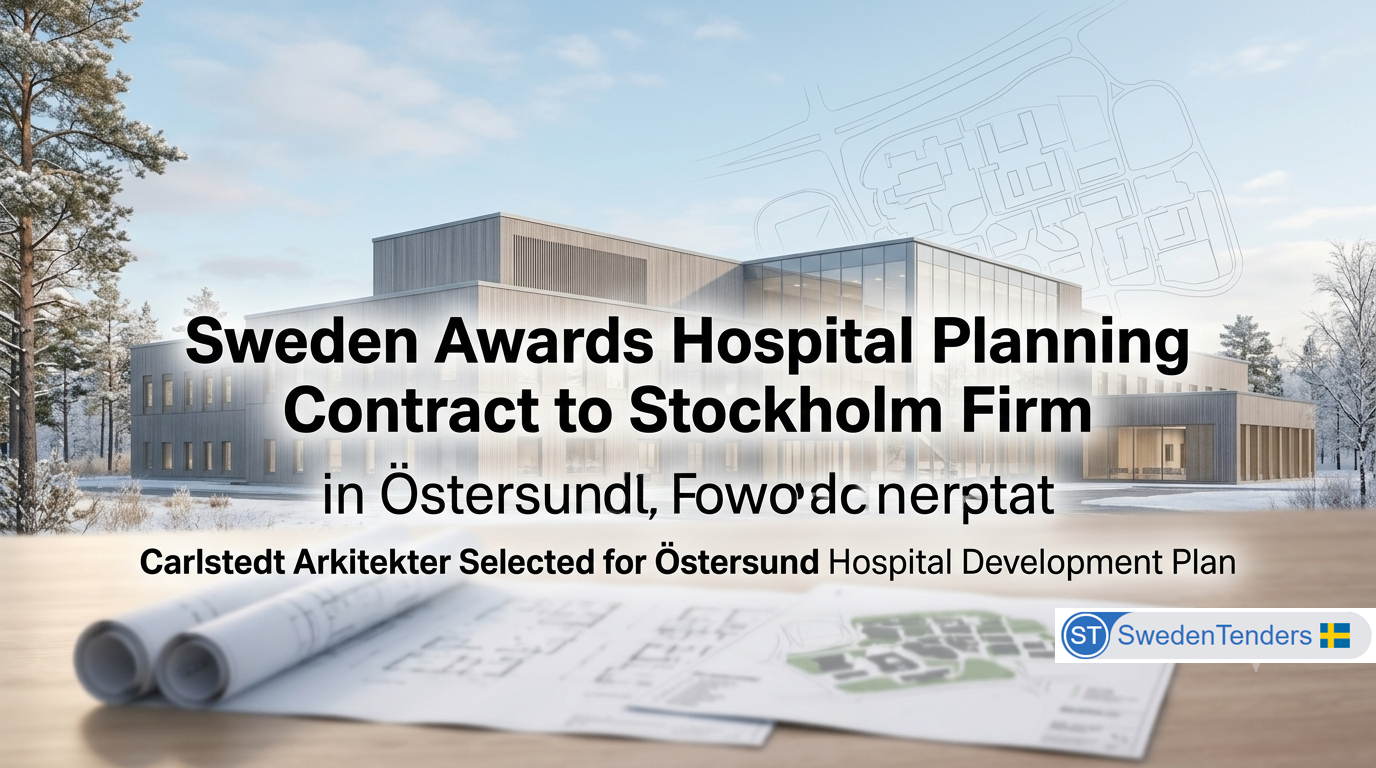
Sweden's Östersund Hospital Is Planning Its Next Decade And a Stockholm Architecture Firm Just Won the Job of Mapping It
14 Jul 2026
Standfirst: Region Jämtland Härjedalen, the regional health authority for Sweden's Jämtland county, has awarded a framework worth up to SEK 18 million to Carlstedt Arkitekter for continued strategic property planning at Östersund Hospital. The contract picks up work that began in an earlier project, and beat out two well-known Swedish architecture and engineering firms to win it. Hospitals rarely get rebuilt all at once. Instead, regional health authorities plan years, sometimes decades, ahead, mapping out which buildings need replacing, which departments need more space, and in what order the work should happen. Region Jämtland Härjedalen has been doing exactly that kind of long-range thinking for Östersund Hospital, and it has just picked the firm that will carry that planning work into its next phase. Why This Contract Matters This is not a construction contract. It is a planning and analysis contract, the kind of work that happens well before any building work begins, but that ultimately shapes how, where and when a hospital campus gets rebuilt or expanded. The notice describes the assignment as a continuation of an already-started project: the appointed firm takes over ongoing work on a strategic property analysis intended to produce a full property development plan for the region's healthcare buildings, with Östersund Hospital specifically named as the focus of the next phase. That continuation detail matters. Rather than starting from scratch, Carlstedt Arkitekter is stepping into work already under way, tasked with finishing preliminary studies and then moving into what the region calls "programme work" - the stage where a hospital's future needs get translated into concrete building and space requirements ahead of any formal design or construction phase. Contract Timeline 9 December 2025 – Winner selected and contract concluded (this result notice was published considerably later, in mid-July 2026). 1 December 2025 – Framework agreement's stated start date. 30 November 2027 – Initial framework term ends, with the region holding the right to extend unilaterally in one-year increments, up to two years. 10 July 2026 – Result notice dispatched to the EU Publications Office. 14 July 2026 – Notice published in OJ S issue 133/2026. Contract Overview Region Jämtland Härjedalen ran an open procedure under the EU's general procurement directive for a framework agreement covering strategic property development consultancy, focused specifically on continuing planning work for Östersund Hospital. Three tenders were received: from Carlstedt Arkitekter, the eventual winner, and from two other well-established Swedish firms, SWECO Sverige and Rundquist arkitekter. The framework was structured without reopening of competition, meaning Carlstedt Arkitekter now holds the assignment directly for the framework's duration rather than competing again for individual pieces of work. The estimated value at tender stage was SEK 12 million, though the maximum value confirmed in this result notice, accounting for the region's right to extend the agreement by up to two additional years, rises to SEK 18 million. Key Contract Details Contracting authority: Region Jämtland Härjedalen, Sweden Contract title: Ramavtal strategisk fastighetsutveckling (Framework agreement for strategic property development) CPV classification: 71240000 – Architectural, engineering and planning services; additional classification 71320000 – Engineering design services Procedure type: Open procedure, non-accelerated Legal basis: Directive 2014/24/EU Framework type: Framework agreement without reopening of competition Estimated value at tender stage: SEK 12,000,000 (excluding VAT) Maximum framework value (including possible extensions): SEK 18,000,000 Contract term: 1 December 2025 to 30 November 2027, with the region able to extend unilaterally in one-year increments for up to two additional years Award criteria: Quality-based, split across three named sub-criteria: planning (6 points), communication (4 points), and relevant work experience and practical knowledge (10 points), with the highest-scoring bidder receiving a SEK 660 deduction applied to their offered hourly rate for a specific pricing category Number of tenders received: 3 Winning tenderer: Carlstedt Arkitekter Aktiebolag Date winner selected / contract concluded: 9 December 2025 Subcontracting: Not yet known GPA coverage: Yes EU funding: Not financed with EU funds Place of performance: Jämtland County, Sweden Project Scope The assignment covers continued strategic property analysis intended to produce a comprehensive property development plan for Region Jämtland Härjedalen's healthcare buildings, with the immediate focus on Östersund Hospital's own development plan. The work is meant to generate analyses and supporting material that help the hospital's various stakeholders make ongoing decisions throughout the planning process, rather than producing a single, static report. The next stage specifically involves completing preliminary studies, known as förstudier, and then progressing into programme work, or programarbete - the phase in Swedish public building projects where a facility's functional and spatial requirements are formally defined ahead of detailed design. In effect, Carlstedt Arkitekter is now responsible for turning years of hospital planning discussion into the structured technical groundwork that any future construction or renovation project at Östersund Hospital would need to build on. The award criteria are worth a closer look. Alongside standard quality measures for planning approach, communication, and relevant experience, the region built in an unusual pricing mechanism: the bidder scoring highest on quality receives a fixed SEK 660 deduction from their quoted hourly rate for a specific pricing category, effectively rewarding top-quality bids with a built-in price advantage rather than scoring quality and price on entirely separate scales. About the Contracting Authority Region Jämtland Härjedalen is the regional public authority responsible for healthcare and related public services across Jämtland County in northern Sweden, home to Östersund and the surrounding area. Classified in the notice as a regional authority operating in the health sector, the region ran this tender directly and remains the point of contact for procurement enquiries. About the Organisations Involved Region Jämtland Härjedalen - Buyer The region designed and ran the open procedure, evaluated the three tenders received on the quality criteria described in the notice, and now holds the resulting framework agreement directly with Carlstedt Arkitekter. It is also named as the organisation providing further information about the procurement procedure. Carlstedt Arkitekter Aktiebolag - Winning Tenderer Carlstedt Arkitekter, based in Stockholm, is the sole winner of this framework. Classified in the notice as a large economic operator, the firm is also flagged as listed on a regulated market, meaning its shares are publicly traded. Subcontracting arrangements for this assignment were not yet known at the time of the notice. SWECO Sverige AB - Non-Winning Tenderer SWECO Sverige, based in Stockholm, is one of Sweden's largest engineering and architecture consultancies and submitted one of the two unsuccessful tenders for this framework. Rundquist arkitekter AB - Non-Winning Tenderer Rundquist arkitekter, also based in Stockholm, submitted the other unsuccessful tender for this framework. Förvaltningsrätten i Härnösand - Review Authority The Administrative Court of Härnösand is the body designated to hear any legal challenge to this procurement, and is also named as the source of further information on review procedures. Procurement Analysis Region Jämtland Härjedalen used an open procedure, allowing any qualified firm to bid without a pre-qualification stage, and drew genuine competition from three credible Swedish architecture and engineering firms, including SWECO, one of the country's largest consultancies. That Carlstedt Arkitekter won against that level of competition is a meaningful result for a firm of its scale. The framework's structure, without reopening of competition, means the region committed to a single supplier relationship for the life of the agreement, rather than preserving ongoing competitive tension through repeated mini-competitions. Combined with the quality-weighted, experience-heavy evaluation criteria, this suggests the region prioritised continuity and demonstrated expertise, likely reflecting the fact that this work continues an already-established planning project rather than starting fresh. The pricing mechanism tied to quality scoring - a fixed monetary deduction from the hourly rate for the top-quality bidder - is a distinctive feature of Swedish public procurement practice, blending quality and price evaluation into a single mechanism rather than treating them as fully separate scored categories. It effectively means the best-scoring bidder on quality also receives a built-in pricing advantage, reinforcing quality as the primary differentiator in the competition. One further detail worth noting: this result notice was published roughly seven months after the contract itself was concluded in December 2025, a gap that is not unusual in EU procurement reporting but is worth flagging for anyone tracking the timeline of when public information about a contract actually becomes available. Additional Procurement Facts The procurement is confirmed as GPA-covered. The project is not financed with EU funds. No dynamic purchasing system was used. No strategic procurement objectives, such as sustainability or social-value targets, were declared for this tender. All three tenders were submitted through the Swedish e-procurement platform e-Avrop. Market & Industry Perspective Strategic property planning for hospitals is a specialised segment of the Swedish architecture and engineering market, sitting upstream of the larger, more visible construction contracts that eventually follow. Winning this kind of framework positions a firm to influence how a major regional hospital's future building programme takes shape, well before any formal design competition or construction tender is issued. That Carlstedt Arkitekter secured this assignment over SWECO, a much larger national consultancy, suggests that specific track record and continuity with the hospital's existing planning process outweighed sheer scale in the region's evaluation, a pattern seen elsewhere in specialised Swedish public-sector consultancy tenders. Economic Significance At a maximum value of SEK 18 million, this framework is modest in isolation, but it carries outsized strategic significance: property development planning of this kind lays the groundwork for what could eventually become a far larger construction programme at Östersund Hospital. For Carlstedt Arkitekter, securing this continuation work also strengthens its position to be involved in whatever formal design or construction procurement follows once the region's development plan is finalised. Future Procurement Opportunities Once the preliminary studies and programme work under this framework are complete, Östersund Hospital's development plan is likely to generate further, larger procurement activity: architectural design competitions, engineering contracts, and eventually construction tenders tied to whatever building projects the plan identifies as priorities. Firms with hospital design and healthcare construction expertise should watch for these follow-on opportunities as the planning work concludes. Other Swedish regional health authorities facing similar ageing hospital infrastructure are likely to run comparable strategic property planning tenders in the coming years, following a similar pattern of early-stage analysis work preceding larger capital projects. Opportunities for Suppliers Architecture and engineering firms with hospital and healthcare facility expertise should track Östersund Hospital's development plan as it progresses, since it is likely to generate substantially larger follow-on procurement. Firms not selected in this round, including SWECO and Rundquist arkitekter, may find opportunities in subsequent phases of the hospital's development programme once this planning work concludes. Suppliers should monitor other Swedish regional health authorities for similar strategic property development tenders, particularly those with ageing hospital infrastructure requiring long-range planning. What Businesses Should Watch Watch for the completion of the preliminary studies and programme work under this framework, since that will likely determine the scope and timing of Östersund Hospital's next, larger construction-related procurement phase. Watch also whether Region Jämtland Härjedalen exercises its option to extend this framework beyond its initial two-year term, which would signal the planning phase is taking longer than originally anticipated. SwedenTenders.com Procurement Intelligence This award is a useful reminder that the real competitive battles in major public infrastructure programmes often happen years before construction contracts are ever issued. Strategic property planning frameworks like this one determine which firms get to shape a hospital's future building programme from the earliest stages, and winning this kind of early-phase work can meaningfully strengthen a firm's position for the larger contracts that follow. The quality-linked pricing mechanism used here - converting top quality scores into a direct hourly-rate discount - is also worth watching as a procurement design choice. It reflects a Swedish public-sector preference for blending price and quality evaluation into a single, quality-weighted mechanism rather than scoring them in isolation, an approach that may appeal to other regional authorities seeking to prioritise expertise without abandoning price discipline entirely. Expect Swedish regional health authorities to continue running early-stage strategic planning tenders well ahead of major hospital construction programmes, and expect firms that win this upstream planning work to be well positioned, though not guaranteed, to compete for the larger design and construction contracts that eventually follow. Supplier Takeaways Track Östersund Hospital's development plan closely, since this planning framework is likely to shape a much larger construction programme in the years ahead. Recognise that early-stage planning and analysis contracts, though modest in value, can meaningfully influence which firms are best positioned for later, larger procurement phases. Study Swedish quality-linked pricing mechanisms, such as the one used here, when preparing bids for similar regional authority tenders. Monitor other Swedish regional health authorities for comparable strategic property planning tenders tied to ageing hospital infrastructure. Key Takeaways Region Jämtland Härjedalen awarded a framework worth up to SEK 18 million to Carlstedt Arkitekter for continued strategic property planning at Östersund Hospital. Carlstedt Arkitekter won against competition from SWECO Sverige and Rundquist arkitekter. The framework continues work from an earlier project, focused on completing preliminary studies and moving into programme work. Award criteria combined quality scoring with a pricing mechanism that rewards the top-quality bidder with a fixed hourly-rate deduction. Any legal challenge would be heard by Förvaltningsrätten i Härnösand. Conclusion Long before any construction crew arrives at Östersund Hospital, the groundwork for its future is being laid through contracts like this one. Carlstedt Arkitekter has won the job of turning years of planning discussion into the structured analysis that will guide the hospital's next chapter, beating out larger, well-known rivals in the process. For a region planning its healthcare infrastructure years ahead, this framework is an early but consequential step in a much longer story. Frequently Asked Questions Who awarded this contract?Region Jämtland Härjedalen, the regional health authority for Jämtland County, Sweden. Who won the contract?Carlstedt Arkitekter Aktiebolag, a Stockholm-based architecture firm. What is the contract worth?The estimated value at tender stage was SEK 12 million, with a maximum framework value, including possible extensions, of SEK 18 million. What does the contract cover?Continued strategic property development planning for Region Jämtland Härjedalen's healthcare buildings, focused on Östersund Hospital's development plan, including completing preliminary studies and moving into programme work. How many companies bid for this contract?Three tenders were received, from Carlstedt Arkitekter, SWECO Sverige, and Rundquist arkitekter. How were bids evaluated?On quality criteria covering planning, communication, and relevant work experience, with the highest-scoring bidder also receiving a fixed deduction from their quoted hourly rate. Is this contract funded by the European Union?No. The notice confirms it is not financed with EU funds. Where can a legal challenge to this award be filed?Any challenge would go to Förvaltningsrätten i Härnösand, the Administrative Court of Härnösand. Source: EU Official Journal, Contract Award Notice 484062-2026, OJ S 133/2026, published 14 July 2026. Contracting authority: Region Jämtland Härjedalen.
View Details