
Sweden Awards SEK 40 Million Framework Agreement for Architectural and Engineering Consultancy Services
21 Jul 2026
Vellinge Municipality has completed a major public procurement to establish a multi supplier framework agreement for architectural, construction management, engineering and inspection services. The agreement brings together several consultancy firms that will support the municipality's future construction and infrastructure projects over the coming years, ensuring access to specialist expertise whenever required.Introduction Modern municipalities are responsible for delivering schools, public buildings, community facilities, transport infrastructure and urban development projects while ensuring transparency, quality and cost efficiency. Rather than conducting a separate procurement for every design or engineering assignment, many public authorities establish framework agreements that allow them to procure specialist consultancy services more efficiently. Following this approach, Vellinge kommun has awarded a framework agreement covering architectural, engineering, project management, construction supervision and inspection services. The procurement creates a pool of qualified consultancy firms that can compete for individual assignments throughout the framework period, allowing the municipality to respond quickly to future investment needs while maintaining procurement compliance. Why This Contract Matters Although the procurement does not finance a single construction project, it plays a strategic role in supporting Vellinge Municipality's long term infrastructure planning. Public sector building programmes require continuous access to experienced architects, engineers, project managers and technical specialists capable of preparing designs, supervising construction, ensuring regulatory compliance and delivering sustainable public assets. By appointing multiple consultancy firms under a single framework agreement, the municipality gains flexibility to source expertise for projects of varying size and complexity without launching a full procurement each time a new assignment arises. This approach reduces administrative workload while encouraging continued competition among framework suppliers during the call off stage. The framework is therefore expected to support numerous future municipal investments, including public buildings, urban development initiatives, renovation programmes and engineering consultancy assignments as they emerge over the life of the agreement. Contract Timeline Milestone Details Country Sweden Contracting Authority Vellinge kommun Procedure Open Procedure Notice Type Contract Award Notice Main Contract Type Services Official Journal OJ S 138/2026 Publication Date 21 July 2026 Contract Overview The procurement establishes a multi supplier framework agreement titled "Ramavtal byggprojektledare och arkitekter". The framework covers a broad portfolio of consultancy services including architecture, engineering, construction management, project leadership, technical inspections and related professional advisory services required by Vellinge Municipality. Instead of awarding a single contract to one supplier, the municipality selected multiple consultancy firms that will be eligible to compete for future assignments issued under the framework. This procurement model provides greater operational flexibility while ensuring access to a diverse range of technical expertise. The procurement falls under the scope of Directive 2014/24/EU governing public sector procurement and uses CPV classifications covering architectural, engineering, construction and inspection consultancy services. Key Contract Details Item Information Buyer Vellinge kommun Country Sweden Procurement Type Services Procurement Title Ramavtal byggprojektledare och arkitekter Main Services Architectural, construction, engineering and inspection consultancy services Procedure Open Procedure Framework Agreement Yes Dynamic Purchasing System No Estimated Framework Value SEK 32,000,000 Maximum Framework Value SEK 40,000,000 Award Basis Most Economically Advantageous Tender Legal Basis Directive 2014/24/EU Project Scope The framework has been designed to provide Vellinge Municipality with on demand access to specialist consultancy services throughout the duration of the agreement. Individual call off contracts may include architectural design, engineering studies, project management, construction supervision, technical inspections, feasibility studies and advisory services supporting municipal investment programmes. Framework agreements of this nature are commonly used by municipalities because they allow authorities to procure consultancy expertise rapidly while maintaining competitive pricing through mini competitions or predefined allocation mechanisms established under the framework. The municipality has not disclosed the detailed allocation mechanism for future assignments within the published award notice. About the Contracting Authority Vellinge kommun is the contracting authority responsible for this procurement. As a Swedish municipal authority, it oversees the planning, development, maintenance and delivery of local public infrastructure and municipal services for residents. The municipality regularly procures consultancy expertise to support capital investment programmes, public building developments, engineering projects, urban planning initiatives and technical advisory services. Establishing a framework agreement enables the authority to access qualified specialists quickly whenever new projects require professional design or engineering support. About the Organisations Involved Vellinge kommun acts as the contracting authority and will manage future call off contracts under the framework agreement. It is responsible for selecting suppliers for individual assignments in accordance with the procurement rules established within the framework. NIRAS Sweden AB is one of the successful framework participants appointed to provide consultancy services. The company secured a place on the framework following the competitive procurement process and will be eligible to compete for future assignments issued by the municipality. KAMIKAZE Arkitekter AB was also selected as a framework supplier. The firm's appointment expands the municipality's pool of architectural expertise available for future public building and urban development projects. The framework also includes several additional successful consultancy firms covering architecture, engineering, project management and construction related advisory services. Together, these organisations provide Vellinge Municipality with access to a broad range of professional capabilities that can be utilised through future call off contracts as municipal infrastructure and development projects progress. Procurement Analysis Vellinge Municipality conducted this procurement using the Open Procedure under Directive 2014/24/EU, allowing any interested economic operator to submit a tender. The open procedure is widely used for public sector consultancy procurements because it promotes transparency, competition and equal access to government contracts. Rather than awarding a single long term consultancy contract, the municipality established a multi supplier framework agreement. This procurement model enables the authority to appoint several qualified consultancy firms that will compete for individual assignments during the framework period. Such an approach provides flexibility while ensuring continuous access to specialist architectural, engineering and project management expertise. The contract covers a broad range of professional consultancy disciplines, including architectural design, engineering consultancy, construction project management and technical inspection services. Since municipal investment programmes often involve projects of different sizes and technical complexity, maintaining a diversified supplier base reduces procurement lead times and improves resource availability. The procurement was evaluated using the Most Economically Advantageous Tender (MEAT), balancing quality and commercial value rather than selecting suppliers solely on price. This evaluation approach is commonly adopted for professional consultancy contracts where technical competence, project experience and delivery capability are critical success factors. The framework agreement has an estimated value of approximately SEK 32 million, while the maximum value over its lifetime may reach approximately SEK 40 million. The notice confirms that the procurement establishes a framework agreement and does not use a Dynamic Purchasing System (DPS). The procurement is also covered by the WTO Government Procurement Agreement (GPA). Additional Procurement Facts Item Details Contracting Authority Vellinge kommun Country Sweden Procedure Open Procedure Legal Basis Directive 2014/24/EU Contract Type Services Main Services Architectural, construction, engineering and inspection consultancy Framework Agreement Yes Estimated Framework Value SEK 32,000,000 Maximum Framework Value SEK 40,000,000 Dynamic Purchasing System No Award Method Most Economically Advantageous Tender (MEAT) Government Procurement Agreement Yes Official Journal OJ S 138/2026 TED Notice 503167-2026 Market and Industry Perspective The award reflects the continued reliance of Swedish municipalities on framework agreements for procuring professional consultancy services. Rather than engaging consultants on a project by project basis through individual procurements, framework arrangements provide a structured mechanism for accessing qualified expertise whenever new municipal investments are initiated. Demand for architectural and engineering consultancy services continues to grow as municipalities modernise public infrastructure, develop sustainable communities and upgrade educational, healthcare and civic facilities. Framework agreements enable authorities to accelerate project delivery while maintaining compliance with procurement legislation. The consultancy market is becoming increasingly multidisciplinary. Modern public projects require architects, structural engineers, construction managers, environmental specialists and project leaders to collaborate from the earliest planning stages through project completion. Multi supplier frameworks therefore offer municipalities greater flexibility in assembling project teams with the required expertise. Economic Significance Although the framework agreement does not guarantee expenditure up to its maximum value, it establishes procurement capacity worth up to SEK 40 million for future consultancy assignments. Professional consultancy services represent an important component of public infrastructure investment. Early stage planning, feasibility studies, architectural design and engineering consultancy directly influence project quality, construction costs, sustainability performance and long term operational efficiency. For consultancy firms, inclusion within a municipal framework agreement provides long term opportunities to participate in future public investment programmes without repeatedly competing in standalone procurements. It also strengthens their visibility within Sweden's public infrastructure sector. Future Procurement Opportunities The framework indicates continuing municipal investment in infrastructure planning and public sector development. Similar opportunities are expected across Sweden in areas including: Architectural design services Construction project management Civil engineering consultancy Urban planning consultancy Building inspection services Technical due diligence studies Renovation and refurbishment consultancy Sustainability and environmental design Infrastructure feasibility studies Public building modernisation projects Opportunities for Suppliers The procurement highlights opportunities for companies operating throughout Sweden's built environment sector. Architectural practices Civil engineering consultancies Structural engineering firms Mechanical and electrical engineering consultants Construction management specialists Quantity surveyors Environmental consultants Urban planning consultancies Building inspection companies Project management consultancies Companies capable of delivering multidisciplinary consultancy services and supporting sustainable municipal development are expected to remain well positioned for future framework procurements. What Businesses Should Watch Municipal authorities across Sweden continue using framework agreements to streamline procurement of professional consultancy services. Suppliers should monitor future framework renewals as well as individual call off competitions issued under existing agreements. Growing investments in housing, schools, transport infrastructure, climate adaptation and sustainable urban development are expected to generate continued demand for architectural and engineering expertise over the coming years. SwedenTenders.com Procurement Intelligence From a procurement intelligence perspective, this framework agreement demonstrates several trends shaping public sector consultancy procurement across Europe. Framework agreements remain the preferred procurement model for recurring consultancy requirements. Municipal authorities increasingly appoint multiple suppliers to improve flexibility and resilience. Professional consultancy contracts continue emphasising quality alongside commercial competitiveness. Long term supplier relationships support faster mobilisation for future public investment projects. Integrated multidisciplinary consultancy services are becoming increasingly important for complex infrastructure programmes. Public sector investment continues supporting demand for specialist engineering and architectural expertise. Supplier Takeaways Build multidisciplinary consultancy capabilities. Strengthen experience in public sector infrastructure projects. Maintain expertise in sustainable building and urban development. Monitor Swedish municipal framework renewals. Develop competitive teams for call off competitions. Invest in long term client relationships within the public sector. Key Takeaways Vellinge Municipality established a multi supplier framework agreement for consultancy services. The framework supports future municipal construction and infrastructure projects. The agreement has an estimated value of SEK 32 million and a maximum value of SEK 40 million. Multiple architectural and engineering consultancies have been appointed as framework participants. The procurement promotes flexibility, competition and efficient project delivery. Future call off contracts will provide continuing opportunities for appointed suppliers. Conclusion The establishment of Vellinge Municipality's framework agreement marks an important step in strengthening the authority's long term capacity to deliver public infrastructure and community development projects. By selecting multiple consultancy firms, the municipality has created a flexible procurement model capable of supporting projects ranging from architectural design to engineering consultancy and construction management. For suppliers, appointment to the framework represents more than a single contract award. It provides access to future municipal investment opportunities while reinforcing long term collaboration between the public sector and Sweden's architectural and engineering consultancy industry. As municipalities continue investing in sustainable infrastructure and urban development, similar framework agreements are expected to remain a central feature of public procurement across the Nordic region. Source: TED Contract Award Notice: 503167-2026: Official Journal of the European Union (OJ S 138/2026): Publication Date: 21 July 2026.
View Details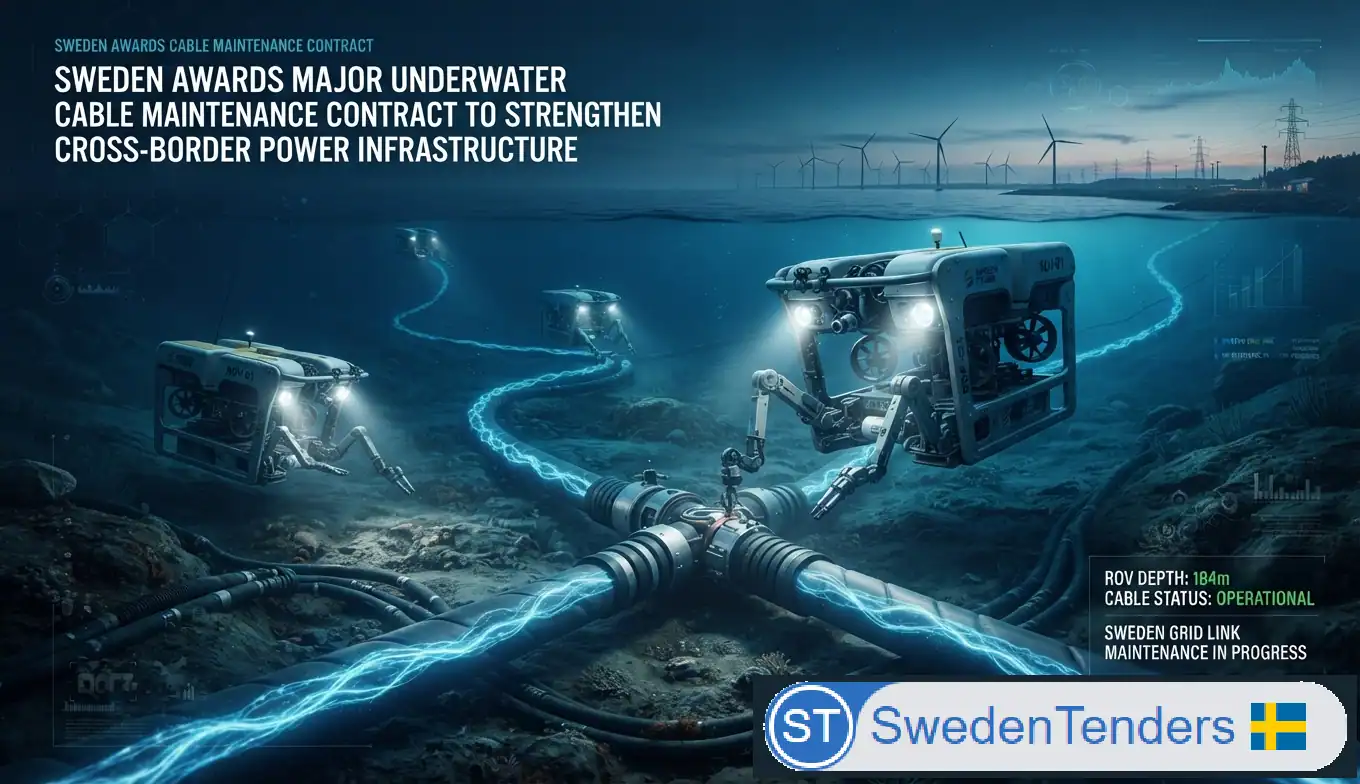
Sweden Awards Major Underwater Cable Maintenance Contract to Strengthen Cross-Border Power Infrastructure
20 Jul 2026
Standfirst: Swedish transmission system operator Svenska Kraftnät has awarded a major contract for underwater cable repair preparedness to Nexans Norway AS following a competitive negotiated procurement. Valued at approximately SEK 110 million, the agreement is designed to ensure rapid repair capabilities for critical submarine electricity transmission cables connecting Sweden with neighbouring countries, reinforcing energy security and grid reliability across Northern Europe. Introduction Svenska Kraftnät, Sweden's national electricity transmission system operator, has completed a significant public procurement for the provision of underwater cable repair preparedness services. The contract covers emergency repair capabilities for the organisation's existing submarine power cable infrastructure that connects Sweden with neighbouring electricity markets including Denmark, Poland, Lithuania and Finland. The procurement highlights the increasing importance of maintaining resilient cross border electricity infrastructure as European countries continue expanding interconnected power networks. Rather than procuring new cable installations, the contract focuses on ensuring that specialised repair resources remain available whenever faults occur on strategically important submarine transmission links. Following a negotiated procedure with prior publication, Svenska Kraftnät selected Nexans Norway AS as the successful contractor. The awarded contract, valued at SEK 110 million, provides the utility with access to specialised expertise, vessels and technical capabilities required for repairing high voltage submarine cable systems that play a vital role in maintaining secure electricity transmission between Sweden and neighbouring countries. Why This Contract Matters Submarine electricity cables are among the most critical assets within Europe's interconnected power grid. These cables facilitate the exchange of electricity between countries, improve energy security, support renewable energy integration and enable cross border electricity trading. Any prolonged outage can affect electricity markets, system stability and the reliability of power supplies across multiple countries. Recognising these strategic risks, Svenska Kraftnät initiated this procurement to secure long term repair preparedness rather than waiting until faults occur. By maintaining contractual access to specialised repair resources, the organisation can significantly reduce response times and restore damaged submarine cable systems more efficiently. The contract also reflects the growing emphasis on infrastructure resilience throughout Europe. Climate change, increased maritime activity and ageing transmission assets have heightened the importance of rapid emergency response capabilities for underwater energy infrastructure. Instead of relying solely on internal maintenance resources, Svenska Kraftnät has partnered with an experienced international contractor possessing specialised offshore capabilities. This approach enables the transmission operator to access advanced technical expertise while ensuring operational flexibility during emergency situations. Contract Timeline Milestone Details Country Sweden Buyer Svenska Kraftnät Contract Award Notice 498557-2026 Official Journal OJ S 137/2026 Publication Date 20 July 2026 Procedure Negotiated procedure with prior publication Main CPV 31321400 - Underwater Cable Contract Value SEK 110,000,000 Winner Selected 16 June 2026 Contract Signed 16 June 2026 Contract Overview The procurement concerns the establishment of repair preparedness for Svenska Kraftnät's submarine electricity cable infrastructure. These underwater cable systems transmit electricity between Sweden and neighbouring countries, making them essential components of the Nordic and European electricity network. The contract requires the successful supplier to maintain the technical capability, specialist personnel and operational readiness necessary to respond rapidly whenever underwater cable failures occur. Services are expected to include mobilisation of repair vessels, cable inspection, fault localisation, repair planning and restoration of damaged transmission infrastructure. Unlike conventional supply contracts, this agreement focuses on maintaining continuous emergency readiness rather than delivering physical products. Such contracts require significant engineering expertise, offshore operational capability and experience working on high voltage submarine cable systems. Key Contract Details Category Information Contracting Entity Svenska Kraftnät Country Sweden Sector Electricity Transmission Procurement Title Repair Preparedness for Underwater Cables Contract Type Supplies Procedure Negotiated Procedure with Prior Publication Main CPV 31321400 - Underwater Cable Estimated Procurement Value SEK 1 (administrative estimate) Awarded Contract Value SEK 110,000,000 Winning Supplier Nexans Norway AS Directive Directive 2014/25/EU Project Scope The awarded contract is intended to safeguard the operational reliability of Svenska Kraftnät's existing submarine cable installations. These assets support electricity transmission between Sweden and neighbouring countries, forming an important part of Northern Europe's interconnected energy infrastructure. The procurement includes maintaining specialist repair preparedness for submarine cable systems rather than constructing new infrastructure. The selected contractor will be responsible for ensuring that repair capabilities remain immediately available whenever failures occur. This includes technical planning, offshore mobilisation, specialised repair equipment and engineering expertise necessary for restoring damaged submarine cables. Because submarine cable repairs often require dedicated vessels, marine engineering teams and sophisticated underwater technologies, only a limited number of international companies possess the capability to perform such work. Consequently, these procurements typically attract highly specialised global suppliers with extensive offshore experience. About the Contracting Authority Svenska Kraftnät is Sweden's national transmission system operator responsible for owning, operating and developing the country's high voltage electricity transmission network. As a public undertaking controlled by the Swedish central government, the organisation plays a critical role in maintaining national electricity security and supporting the integration of renewable energy resources. Beyond managing Sweden's domestic transmission network, Svenska Kraftnät operates several strategically important international electricity interconnections linking Sweden with Denmark, Finland, Poland and Lithuania. These cross border connections strengthen regional energy security, facilitate electricity trading and contribute to the stability of the Nordic and European power markets. The organisation regularly undertakes major procurements covering high voltage infrastructure, substations, transmission lines, digital grid technologies, maintenance services and specialist engineering support. For this procurement, Svenska Kraftnät acted as both the contracting entity and the organisation providing additional information regarding the procurement procedure. About the Organisations Involved Svenska Kraftnät served as the contracting entity and buyer for this procurement. The organisation is responsible for Sweden's national electricity transmission system and oversees critical cross border power infrastructure connecting Sweden with neighbouring countries. Nexans Norway AS was selected as the successful contractor following the negotiated procurement process. Headquartered in Oslo, Norway, Nexans Norway is part of the global Nexans Group and specialises in advanced cable technologies, high voltage power transmission systems and submarine cable engineering. The company possesses extensive experience in designing, manufacturing, installing and repairing submarine power cables, making it well positioned to support complex offshore repair operations. The awarded contract is valued at approximately SEK 110 million. Two additional companies participated in the final competition but were not selected. NKT HV Cables AB, a Swedish manufacturer specialising in high voltage cable systems, submitted a compliant tender but was unsuccessful. Jan De Nul Luxembourg SA, an international offshore engineering and marine infrastructure contractor, also competed for the contract. The participation of these specialised companies demonstrates the high technical complexity of submarine cable maintenance projects and the limited number of suppliers capable of delivering such services internationally.Procurement Analysis Svenska Kraftnät conducted the procurement using a Negotiated Procedure with Prior Publication under Directive 2014/25/EU, the European procurement framework governing utilities operating in sectors such as electricity, water, transport and energy. This procurement route is commonly selected for technically complex contracts where contracting entities need to discuss technical solutions and commercial arrangements with shortlisted suppliers before receiving final tenders. The contract focused on securing long term repair preparedness for Sweden's existing submarine electricity transmission cables. Since these assets are highly specialised and require dedicated marine engineering capabilities, the market consists of only a limited number of qualified international suppliers. The negotiated procedure therefore enabled Svenska Kraftnät to evaluate bidders' technical expertise, mobilisation capability and operational readiness alongside commercial considerations. Rather than awarding the contract solely on price, the contracting authority selected the Most Economically Advantageous Tender (MEAT) based on the best balance between price and quality. This evaluation methodology reflects the critical nature of submarine cable repairs, where response capability and technical competence are often more important than the lowest initial price. The quality evaluation considered several operational criteria, including technical solutions, previous experience in submarine cable repairs, health, safety and environmental (HSE) management, mobilisation capability, response times and organisational suitability. Price represented only one component of the overall evaluation model, reinforcing the authority's emphasis on long term operational reliability. The procurement was not established as a framework agreement and did not utilise a Dynamic Purchasing System (DPS). Furthermore, the project was not financed through European Union funds and was not covered by the WTO Government Procurement Agreement (GPA). Additional Procurement Facts Item Details Contracting Entity Svenska Kraftnät Procedure Negotiated Procedure with Prior Publication Directive 2014/25/EU Main CPV 31321400 - Underwater Cable Contract Value SEK 110,000,000 Number of Requests to Participate 4 Final Tenders Received 3 Framework Agreement No Dynamic Purchasing System No EU Funding No Government Procurement Agreement Not Covered Winner Nexans Norway AS Review Authority Förvaltningsrätten i Stockholm Market and Industry Perspective The contract reflects the growing strategic importance of submarine electricity transmission infrastructure across Europe. As renewable energy generation continues to expand, countries are becoming increasingly dependent on cross border interconnectors to balance electricity supply and demand. These high voltage submarine cables enable energy trading, improve grid stability and strengthen regional energy security. Maintaining such infrastructure requires highly specialised engineering expertise, dedicated offshore vessels and sophisticated underwater technologies. Consequently, only a limited number of international companies possess the capability to undertake complex submarine cable repair operations, making this a niche but strategically important procurement market. Transmission system operators across Europe are increasingly investing not only in new interconnectors but also in long term maintenance contracts that ensure rapid emergency response whenever cable failures occur. This trend is expected to continue as offshore wind development and international electricity trading expand throughout the Nordic and Baltic regions. Economic Significance The SEK 110 million contract represents an important investment in Sweden's critical electricity infrastructure. While the agreement primarily concerns repair preparedness rather than new construction, it plays a significant role in protecting the long term reliability of cross border power transmission assets. Reliable submarine cable infrastructure supports uninterrupted electricity exchanges between Sweden and neighbouring countries, helping stabilise electricity markets and improving resilience against supply disruptions. Rapid repair capability also reduces the economic impact of unexpected outages by minimising downtime for critical transmission links. For specialised engineering companies, contracts of this nature provide valuable long term revenue streams while strengthening their position within Europe's growing offshore energy infrastructure market. Future Procurement Opportunities This contract indicates that transmission system operators are increasingly prioritising lifecycle asset management alongside new infrastructure investments. Businesses operating within the energy transmission sector should expect future procurement opportunities relating to: Submarine cable inspection services Offshore cable maintenance programmes Emergency repair preparedness contracts High voltage cable monitoring technologies Marine survey services Offshore engineering consultancy Specialised repair vessels Cable protection and seabed intervention works Asset integrity monitoring solutions Cross border electricity infrastructure projects Opportunities for Suppliers The procurement highlights opportunities for companies operating across the offshore energy and electricity transmission sectors. High voltage cable manufacturers Submarine cable installation specialists Marine engineering contractors Offshore vessel operators Cable inspection service providers Underwater robotics and ROV suppliers Electrical engineering consultancies Asset monitoring technology providers Emergency response contractors Specialised maintenance service providers Companies capable of combining engineering expertise with rapid mobilisation capabilities are likely to remain highly competitive in future utility procurements involving offshore electricity infrastructure. What Businesses Should Watch Transmission system operators throughout Europe continue investing in both new interconnectors and maintenance of existing infrastructure. Suppliers should monitor procurement programmes issued by national grid operators as demand grows for specialised repair capabilities supporting offshore transmission assets. Increasing offshore wind development, expansion of international electricity interconnections and modernisation of ageing transmission infrastructure are expected to generate additional procurement opportunities for specialist engineering companies during the coming years. SwedenTenders.com Procurement Intelligence From a procurement intelligence perspective, this contract demonstrates several important trends shaping Europe's utility procurement landscape. Critical infrastructure resilience is becoming a major procurement priority. Transmission operators increasingly procure long term operational readiness instead of reactive maintenance. Quality and technical capability are receiving greater weighting than lowest price. Specialised offshore engineering companies continue dominating the submarine cable maintenance market. Cross border electricity infrastructure is becoming increasingly important for European energy security. Lifecycle maintenance contracts are expected to grow alongside investments in new energy infrastructure. Supplier Takeaways Develop specialist offshore engineering expertise. Strengthen emergency mobilisation capabilities. Invest in submarine inspection and repair technologies. Maintain strong HSE management systems. Build experience in high voltage transmission infrastructure. Monitor utility procurement programmes across Northern Europe. Key Takeaways Svenska Kraftnät awarded a SEK 110 million submarine cable repair preparedness contract. Nexans Norway AS secured the contract following a negotiated procurement procedure. The agreement supports Sweden's cross border electricity transmission infrastructure. Three final tenders competed for the contract after four participation requests. The procurement emphasised quality, response capability and technical expertise. The project strengthens long term resilience of strategically important energy infrastructure. Conclusion Svenska Kraftnät's award of the underwater cable repair preparedness contract to Nexans Norway AS represents a strategic investment in the resilience of Sweden's electricity transmission network. By securing long term access to specialised offshore repair capabilities, the transmission operator is better positioned to respond rapidly to potential cable failures affecting critical cross border electricity connections. As Europe's interconnected energy infrastructure continues expanding, contracts of this nature are expected to become increasingly important. They demonstrate how utilities are shifting procurement strategies towards lifecycle asset management, operational resilience and long term infrastructure reliability. For engineering companies specialising in offshore energy infrastructure, these procurements will continue to present valuable opportunities across the European utilities sector. Source: TED Contract Award Notice: 498557-2026 : Official Journal of the European Union (OJ S 137/2026): Publication Date: 20 July 2026
View Details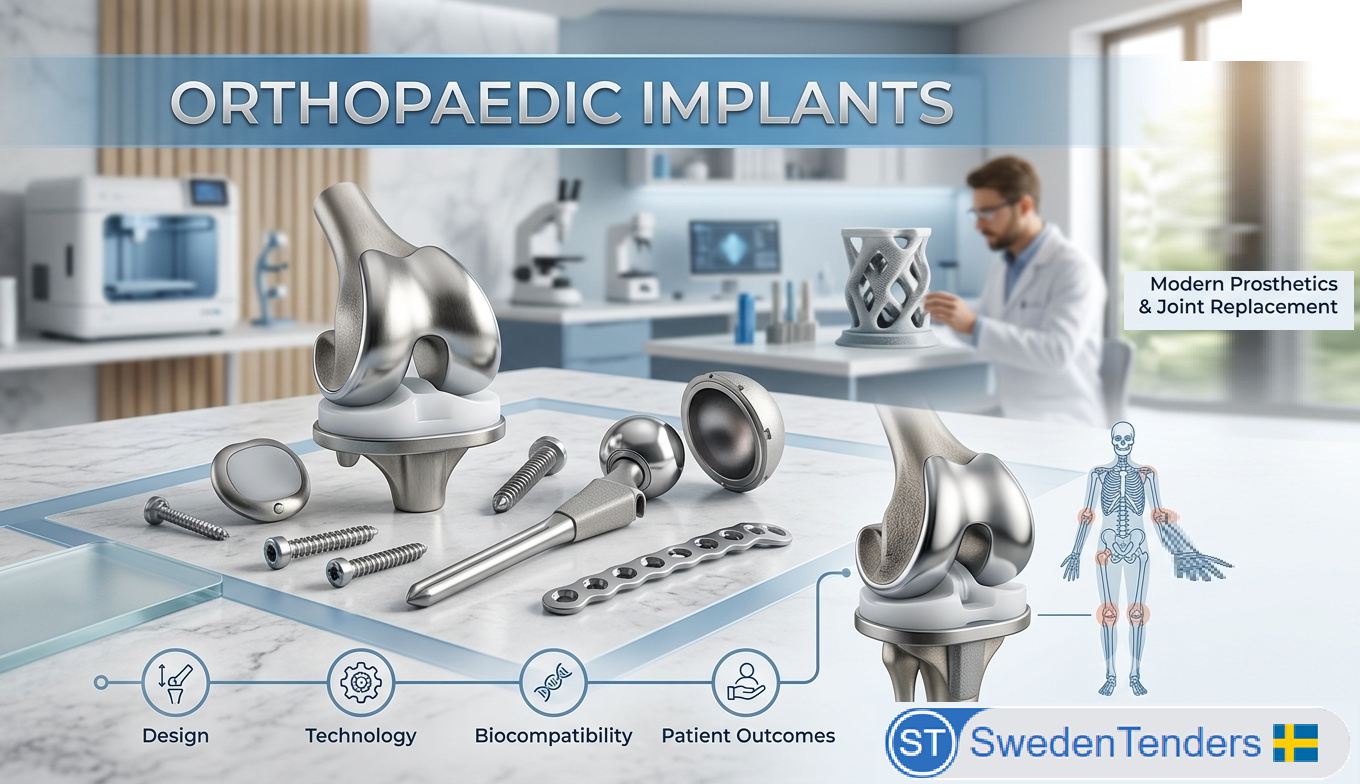
Four Swedish Regions the Size of Half a Country Just Signed One Contract to Rebuild Their Patients' Hips, Knees and Spines
17 Jul 2026
StandfirstSweden's four northernmost healthcare regions, covering a landmass larger than England but a fraction of its population, have jointly awarded a multi category framework agreement for orthopaedic implants worth up to SEK 648.7 million (roughly €59 million). Global implant makers Zimmer Biomet, Johnson & Johnson, Link Sweden and Osteotec Nordics are among the winners across a 33 category catalogue spanning shoulder, hip, knee, spine and trauma surgery.IntroductionRunning a hospital in Umeå, Luleå, Sundsvall or Östersund means serving patients scattered across some of the most sparsely populated territory in the European Union. Västerbotten, Norrbotten, Västernorrland and Jämtland Härjedalen together cover roughly half of Sweden's land area but hold only a small fraction of its population, a geography that makes joint purchasing not just efficient but close to essential.These four regions, known collectively in Swedish healthcare planning as the Northern Healthcare Region ("Norra sjukvårdsregionen"), have run a shared procurement for orthopaedic implants together for close to a decade. Their latest joint framework agreement, structured across 33 separate product categories covering everything from shoulder replacements to spinal fusion systems, has now been awarded, with the confirmed winners in the categories reviewed including Zimmer Biomet Sweden, Johnson & Johnson, Link Sweden and Osteotec Nordics.Why This Contract MattersOrthopaedic implants, the metal, ceramic and polymer components that replace or reinforce damaged joints and bones, sit at the centre of some of the most common major surgeries performed in any developed health system: hip and knee replacements, spinal fusion and trauma fixation after fractures. An ageing population and a steady rise in joint replacement surgery across Europe make this category of hospital spending both large and structurally growing.For four regions that individually would struggle to negotiate the most competitive terms from global implant manufacturers, pooling their purchasing power into a single framework is a straightforward way to secure better pricing and broader product access than any one region could manage alone. It also means a hip or shoulder implant used in a rural hospital hundreds of kilometres from Stockholm is sourced through exactly the same competitive, EU regulated process as one used in a major metropolitan teaching hospital.Contract Timeline Date Milestone c. 2017–2019 Predecessor joint framework agreements for orthopaedic implants established between the same four regions 2026 (date undisclosed) Open tender procedure launched for the renewed framework 11 May 2026 Winners selected across the reviewed lots 18 June 2026 Contracts concluded with winning suppliers 17 July 2026 Award notice published in OJ S 136/2026 Contract OverviewRegion Västerbotten led a joint procurement on behalf of itself, Region Jämtland Härjedalen, Region Norrbotten and Region Västernorrland, running an open EU wide procedure to establish framework agreements across 33 distinct lots covering shoulder ("Axel"), bone cement ("Cement"), hip ("Höft"), knee ("Knä"), spine ("Rygg") and trauma ("Trauma") implant categories. Each lot was evaluated on the best price quality ratio, with pricing and a number of technical assessment criteria specific to each product category set out in the tender documentation.The framework agreements were awarded without reopening of competition, meaning each of the four regions can call off supplies directly from the awarded suppliers in their category without running a further mini competition. Award notices reviewed for this article confirm at least four suppliers among the winners, Zimmer Biomet Sweden AB, Johnson & Johnson Aktiebolag, Link Sweden Aktiebolag and Osteotec Nordics AB, with Arthrex Sverige AB named as an unsuccessful bidder in at least one category. Given the scale of the notice, spanning all 33 lots, SwedenTenders.com has focused this analysis on the confirmed details available and recommends consulting the full TED notice for category by category winner detail beyond what is summarised here.Key Contract Details Field Detail Lead contracting authority Region Västerbotten Joint buyers Region Jämtland Härjedalen, Region Norrbotten, Region Västernorrland Title Ortopediska Implantat CPV code 33183100 - Orthopaedic implants Procedure type Open Legal basis Directive 2014/24/EU Estimated value (full procurement) SEK 610,000,000 Maximum value of framework agreements (this notice) SEK 648,732,500 (approximately €59 million) Approximate reestimated value SEK 480,666,400 (approximately €43.7 million) Number of lots 33, covering shoulder, cement, hip, knee, spine and trauma implant categories Award criteria Best price quality ratio ("Bästa förhållande mellan pris och kvalitet"), calculation method set out per category in the tender documents Framework structure Framework agreement, without reopening of competition Confirmed winning suppliers Zimmer Biomet Sweden AB, Johnson & Johnson Aktiebolag, Link Sweden Aktiebolag, Osteotec Nordics AB EU funding None disclosed GPA coverage Yes Review body Förvaltningsrätten i Umeå (Administrative Court of Umeå) Place of performance Västerbottens län and the wider Northern Healthcare Region, Sweden Project ScopeThe 33 lots reviewed span the full clinical range of orthopaedic reconstruction and trauma care: four shoulder prosthesis categories (modular stemmed, metaphyseal, fracture and reverse shoulder replacement), three bone cement categories, nine hip replacement and revision categories (from standard cemented primary hips through to complex revision stems), four knee replacement categories, seven spine categories (including robotic spine surgery and paediatric scoliosis systems) and six trauma fixation categories (plating systems, intramedullary nails and external fixation).This breadth reflects the reality that a regional health system needs continuous access to implants across virtually every major orthopaedic procedure, not just the highest volume categories like standard hip and knee replacement. Splitting the framework into 33 separate lots, rather than a smaller number of broader categories, allows the regions to award each specific implant type to whichever supplier offers the strongest combination of price and clinical quality for that particular product, rather than forcing a single supplier to cover the entire orthopaedic catalogue.About the Contracting AuthorityRegion Västerbotten led this joint procurement on behalf of the Northern Healthcare Region, a long standing collaborative arrangement among Sweden's four northernmost regions for coordinating major clinical procurement. Together, Västerbotten, Norrbotten, Västernorrland and Jämtland Härjedalen cover an area comparable in size to Sweden's entire southern half, despite having a combined population far smaller than metropolitan Stockholm alone. Joint procurement of this kind, already used by the same four regions for categories ranging from visual aids to wound care equipment to medication dispensing services, is a structural response to that geography: it lets each region access competitive supplier terms it would struggle to negotiate independently.Region Jämtland Härjedalen, Region Norrbotten and Region Västernorrland are named as joint buyers under this framework, each drawing supplies directly from the awarded categories for their own regional hospital networks.About the Organisations InvolvedZimmer Biomet Sweden AB, Winning TendererThe Swedish subsidiary of Zimmer Biomet, a major global orthopaedic device manufacturer with a broad portfolio spanning joint replacement, trauma and surgical technology. Zimmer Biomet was confirmed as a winner in the shoulder prosthesis category reviewed, reflecting its established position as one of the largest suppliers of shoulder and joint implants to the Swedish public health system.Johnson & Johnson Aktiebolag, Winning TendererThe Swedish arm of Johnson & Johnson, whose medical devices business (operating through its DePuy Synthes orthopaedics division) is among the largest global suppliers of joint replacement and trauma fixation systems. Johnson & Johnson was confirmed as a winner in the shoulder prosthesis category reviewed.Link Sweden Aktiebolag, Winning TendererThe Swedish subsidiary of Waldemar Link, a German orthopaedic implant manufacturer with a long specialism in hip and knee revision systems. Link Sweden was confirmed as a winner across multiple categories reviewed, consistent with the company's established position in the Swedish public procurement market for complex joint replacement implants.Osteotec Nordics AB, Winning TendererA Nordic focused orthopaedic implant supplier confirmed as a winner across multiple categories reviewed in this framework, reflecting a smaller, more specialised competitor operating alongside the larger multinational device manufacturers in this market.Arthrex Sverige AB, Non Winning TendererThe Swedish subsidiary of Arthrex, a global orthopaedic and sports medicine device company. Arthrex Sverige submitted a tender for the shoulder prosthesis category reviewed but was not selected as a winner in that category; the company has a long history of participating in this same joint procurement across previous rounds of the framework.Förvaltningsrätten i Umeå, Review OrganisationThe Administrative Court of Umeå is designated as the review body for this procurement, providing the legal channel through which any bidder wishing to contest an award decision across the framework's categories can do so.Procurement AnalysisRunning a single open procedure across 33 separate lots, rather than issuing 33 separate tenders, is a deliberate efficiency choice: it lets the four regions publish one consolidated set of tender documents, run one evaluation timeline and award each category on its own merits, while sparing suppliers, many of whom compete across multiple categories, as Link Sweden and Osteotec Nordics appear to here, from navigating a fragmented set of separate procurement processes.The "best price quality ratio" award methodology, with calculation details left to each category's own tender documentation, reflects how clinically sensitive this category of purchasing is. Orthopaedic implants are not interchangeable commodities: a shoulder prosthesis and a spinal fusion cage demand entirely different technical evaluation criteria, so leaving the precise weighting and clinical assessment method to each category's own documentation, rather than applying one blanket formula across all 33 lots, allows the evaluation to reflect genuine clinical and technical differences between implant types.The absence of a ranking indicator on winning tenders, combined with the "without reopening of competition" framework structure, suggests each region can call off directly from whichever supplier or suppliers were awarded a given category, without running a further competitive step, consistent with how earlier rounds of this same joint framework have operated since at least 2017.Additional Procurement FactsFive tenders were received in the shoulder prosthesis category reviewed in detail, none of them variant bids and none disclosed as involving subcontracting. This is one of the longer running joint procurement collaborations among Swedish regions, with predecessor iterations of this same orthopaedic implants framework dating back to at least 2017 and 2019 according to public procurement records and earlier rounds have included additional suppliers such as Medtronic, Smith & Nephew, Stryker, Swemac Orthopaedics and Tresona Instrument, indicating a broader and more competitive supplier base across the framework's full 33 categories than the subset confirmed in this review. The framework is confirmed as GPA covered and carries no EU funding, financed entirely through the four regions' own healthcare budgets.Market & Industry PerspectiveThe Swedish orthopaedic implants market, like most of Europe's, is dominated by a small number of large multinational device manufacturers, Zimmer Biomet, Johnson & Johnson's DePuy Synthes, Stryker, Smith & Nephew and Medtronic among them, alongside more specialised players such as Link (hip and knee revision systems), Arthrex (sports medicine and shoulder) and smaller Nordic focused suppliers such as Osteotec Nordics and Swemac Orthopaedics. Splitting a framework into dozens of narrow clinical categories, as this one does, gives smaller, more specialised suppliers a genuine route to winning individual categories where their product is strongest, rather than being squeezed out entirely by manufacturers with a broader but less specialised catalogue.The recurrence of the same four northern regions running this joint procurement together over multiple contract cycles, spanning close to a decade, also signals a stable, mature collaborative purchasing model, one increasingly common across Sweden's more sparsely populated northern regions for major clinical categories beyond orthopaedics alone.Economic SignificanceAt a maximum framework value of SEK 648.7 million or roughly €59 million, this is a substantial category of clinical spending for four regions with a combined population far smaller than many single Swedish metropolitan areas. Joint procurement of this kind is what allows these regions to access competitive implant pricing at a scale closer to what a much larger single region could negotiate independently, a meaningful structural advantage given the sustained growth in joint replacement and spinal surgery volumes across ageing populations throughout Europe.For winning suppliers, a multi year position across one or more of the framework's 33 categories provides steady, recurring revenue from four public health systems simultaneously, without the cost of managing four separate regional sales and tendering relationships.Future Procurement OpportunitiesFramework agreements of this kind in the Swedish public health sector typically run for several years before requiring retender and the pattern of this specific joint procurement, recurring roughly every few years since at least 2017, suggests the next competitive opportunity across these 33 categories will emerge again in the coming years. Suppliers not selected in this round, including Arthrex Sverige in the category reviewed, retain a clear route back into the framework at its next renewal, consistent with how the same companies have moved in and out of winning positions across previous iterations of this joint procurement.Opportunities for SuppliersOrthopaedic device manufacturers, particularly those with strength in specific clinical niches rather than a full catalogue offering, should treat this framework's category by category structure as a genuine point of entry: smaller or more specialised suppliers can compete directly for individual lots, a particular hip revision system, a paediatric scoliosis system, a specific trauma fixation type, without needing to match a multinational's breadth across all 33 categories. Suppliers of adjacent clinical technology, such as surgical navigation systems, robotic assisted surgery platforms (explicitly referenced in the spine category of this framework) and implant tracking or traceability software, may also find complementary opportunities as regional hospitals implement the awarded implant categories.What Businesses Should WatchThree developments are worth tracking. First, how the four regions distribute call off volumes across categories where multiple suppliers were awarded without a ranked order, since that determines each winning company's actual share of the framework's value in practice. Second, whether robotic and computer assisted spine surgery technology, referenced explicitly in this framework's spine category, expands further in future rounds as robotic assisted orthopaedic surgery adoption grows across Swedish hospitals. Third, whether other Swedish regional groupings follow this same joint, multi region procurement model for orthopaedic implants, given its now decade long track record among the four northern regions.SwedenTenders.com Procurement IntelligenceThis framework is a clear demonstration of how geographically large, sparsely populated health systems solve a purchasing problem that more compact regions rarely face: achieving competitive scale despite a smaller combined population. By pooling four regions' orthopaedic implant needs into one 33 category framework, Västerbotten, Norrbotten, Västernorrland and Jämtland Härjedalen access supplier terms and product breadth that none of them could realistically negotiate alone, a model with a demonstrated track record stretching back close to a decade across successive iterations of this same joint procurement.The granular, 33 lot category structure is itself a notable procurement design choice. Rather than awarding a small number of broad contracts to a handful of full catalogue suppliers, splitting implants into narrow clinical categories preserves competitive access for specialised manufacturers whose strength lies in a specific product type rather than breadth across the entire orthopaedic catalogue. That structure appears to have produced a genuinely mixed winner base in the categories reviewed here, combining large multinational device makers with more focused Nordic and international specialists.Suppliers watching Nordic public healthcare procurement more broadly should note the durability of this specific four region collaboration: it has now run across multiple contract cycles since at least 2017, suggesting it functions as a stable, ongoing procurement relationship rather than a one off consolidation experiment, a structure likely to persist and potentially to be replicated by other groups of smaller regional health systems facing similar geographic and population constraints.Supplier Takeaways Framework agreements split into narrow clinical categories, as this one is across 33 lots, give specialised manufacturers a genuine route to winning individual product categories without needing full catalogue breadth. This four region joint procurement has a demonstrated multi cycle history dating back to at least 2017, suppliers not selected in this round have a track record of returning to compete successfully in subsequent rounds. Winning a category without a ranked order among multiple suppliers means actual order volume depends on how the four regions distribute call offs in practice, not simply on being named a winner. Adjacent technology areas, surgical navigation, robotic assisted spine surgery platforms, implant traceability software, may find complementary opportunities as awarded categories are implemented. Sparsely populated, geographically large health systems across the Nordics are a recurring model for this kind of multi region joint procurement; suppliers active in one Swedish joint framework should watch for similar collaborative structures elsewhere in the region. Key Takeaways Region Västerbotten, together with Region Jämtland Härjedalen, Region Norrbotten and Region Västernorrland, jointly awarded a 33 lot orthopaedic implants framework worth up to SEK 648.7 million (approximately €59 million). Confirmed winning suppliers include Zimmer Biomet Sweden AB, Johnson & Johnson Aktiebolag, Link Sweden Aktiebolag and Osteotec Nordics AB. The framework covers shoulder, cement, hip, knee, spine and trauma implant categories, awarded without reopening of competition. This is a long running joint procurement collaboration among the four northernmost Swedish regions, with predecessor frameworks dating back to at least 2017. The contract carries no EU funding and is covered by the WTO Government Procurement Agreement. ConclusionFew procurement notices illustrate the practical logic of joint public purchasing as clearly as this one. Four regions spread across roughly half of Sweden's landmass, serving a comparatively small population, have spent nearly a decade refining a shared framework that lets each of them access the same competitive implant pricing and product range as a far larger health system. The 33 category structure means the framework serves everything from a routine hip replacement in Umeå to a paediatric scoliosis correction in Östersund, proof that scale in public procurement is as much about smart structural design as it is about raw purchasing volume.Frequently Asked QuestionsWho led this procurement? Region Västerbotten, acting jointly with Region Jämtland Härjedalen, Region Norrbotten and Region Västernorrland.What is the framework worth? The maximum value of the framework agreements in this notice is SEK 648,732,500, approximately €59 million, with a reestimated approximate value of SEK 480,666,400.Which suppliers won contracts under this framework? Confirmed winners in the categories reviewed include Zimmer Biomet Sweden AB, Johnson & Johnson Aktiebolag, Link Sweden Aktiebolag and Osteotec Nordics AB.How many product categories does the framework cover? 33 separate lots, spanning shoulder, bone cement, hip, knee, spine and trauma implant categories.Is this a new arrangement between these regions? No. These four regions have run joint orthopaedic implant procurements together since at least 2017, making this the latest iteration of a long standing collaborative purchasing model.Was any EU funding involved? No. The notice confirms the framework is not financed with EU funds.Why do four regions procure this together rather than separately? Västerbotten, Norrbotten, Västernorrland and Jämtland Härjedalen together cover a vast, sparsely populated area of northern Sweden; pooling their purchasing power secures more competitive supplier terms than any one region could negotiate alone. Source: EU Official Journal, Contract Award Notice 495946-2026, OJ S 136/2026, published 17/07/2026. Contracting authority: Region Västerbotten.
View Details